
How Do You Choose a Kitchen Worktop?
Start with the height and the depth, because those decide how the kitchen feels to use every day. Material and colour come second. They are the part everybody gets stuck on first.
A UK kitchen worktop is normally 890mm to 920mm high and 600mm to 650mm deep, with 900mm by 600mm the most common combination. Height should suit the people using it rather than the standard, which is one of the clearest benefits of a bespoke kitchen. On material, laminate costs £180 to £280 per square metre supplied and fitted, solid timber £220 to £380, granite £340 to £520, quartz £380 to £550 and porcelain or sintered stone £520 to £680.
How high should a kitchen worktop be?
The UK standard of 900mm was set for someone around 1.7m tall. If you are noticeably taller or shorter than that, you have been working at the wrong height in every kitchen you have ever used.
The test is simple. Stand relaxed with your arms by your sides, then bend your elbows to ninety degrees. A comfortable worktop for preparation sits roughly 100mm to 150mm below your bent elbow. For heavy work such as kneading, lower is better. For light work such as chopping, higher is better.
| Your height | Comfortable worktop height | Note |
|---|---|---|
| Under 1.60m | 860mm to 880mm | Standard units feel high, shoulders lift while chopping |
| 1.60m to 1.70m | 880mm to 900mm | The standard works well here |
| 1.70m to 1.80m | 900mm to 920mm | Standard is acceptable, slightly low for prep |
| 1.80m to 1.90m | 920mm to 950mm | Standard causes back strain over time |
| Over 1.90m | 950mm to 980mm | Standard is genuinely uncomfortable |
If two people of very different heights cook together, split the run. Set the main preparation area to the taller person and drop a 900mm section beside the sink. In a bespoke kitchen this costs nothing extra at the drawing stage. Retrofitting it later is impossible.
Height is set by the base unit plus the worktop thickness plus the plinth, so it has to be decided before cabinets are machined. The full sequence of what must be settled when is in How to Plan a Bespoke Kitchen.
How deep are kitchen worktops?
Depth matters more than most people expect, because it decides whether anything can stand at the back of the worktop without being in the way.
| Situation | Depth | Why |
|---|---|---|
| Standard run | 600mm | Sits 20mm to 40mm proud of a 560mm to 580mm base unit |
| Comfortable run | 650mm | Room for a kettle or a knife block at the back |
| Behind a hob | 650mm to 700mm | Landing space and clearance from the wall |
| Narrow galley | 500mm to 560mm | Recovers gangway width where it is critical |
| Island | 1,000mm to 1,200mm | Beyond 1,200mm you cannot reach the middle |
| Island with seating | Add 300mm overhang | Knee space for anyone sitting at it |
| Peninsula | 700mm to 900mm | Working depth plus a small overhang |
A 600mm worktop on a 560mm base unit leaves a 20mm overhang at the front, which is what a drip lands on rather than your cabinet doors. Do not reduce that overhang to gain depth at the back.
Materials compared
Every material trades something. These are UK prices supplied and fitted, including templating on the stone options.
| Material | Cost per square metre | Heat | Scratches | Stains | Repairable |
|---|---|---|---|---|---|
| Laminate | £180 to £280 | Poor | Moderate | Good | No |
| Solid timber | £220 to £380 | Poor | Poor | Poor | Yes, sand and re-oil |
| Granite | £340 to £520 | Excellent | Excellent | Good if sealed | Partly |
| Quartz | £380 to £550 | Moderate | Excellent | Excellent | No |
| Solid surface | £400 to £580 | Poor | Moderate | Excellent | Yes, fully |
| Porcelain or sintered | £520 to £680 | Excellent | Excellent | Excellent | No |
| Marble | £450 to £900 | Good | Poor | Poor | Partly |
Quartz is the default choice in most London kitchens because it is non porous, needs no sealing and takes a knock well. Its one weakness is heat, since the resin binder scorches, so a hot pan straight off the hob leaves a permanent mark. Porcelain and sintered stone solve that at a higher price. Granite handles heat perfectly and needs occasional sealing.
Timber is the one material that improves with repair rather than degrading. It marks readily, then sands back to new. If you like the idea of a surface that carries some history, it is the only honest choice on the list.
We template, fabricate and fit as part of the kitchen
Worktops are specified alongside the cabinetry rather than bolted on afterwards, so heights, overhangs and support are all designed together. Kitchens across Islington, Hackney, Barnet, Haringey, Enfield and Walthamstow.
Thickness and edge profile
Stone comes in 20mm and 30mm as standard. A 30mm slab costs roughly twenty per cent more and reads as considerably more substantial without needing a built up edge.
| Thickness | Effect | Cost | Best for |
|---|---|---|---|
| 12mm to 20mm | Slim and contemporary | Lowest | Minimal schemes, handleless kitchens |
| 30mm | Substantial without bulk | About 20 per cent more than 20mm | The most common bespoke choice |
| 40mm to 60mm built up | Traditional weight | Adds mitring labour | Period kitchens, islands |
| 100mm plus on an island | A statement block | Significant | Large islands only, looks wrong on a run |
Edge profiles matter less than people think. A square or slightly eased edge suits almost every kitchen. Ornate profiles such as ogee and bullnose read as dated far faster than the stone itself does.
What worktop goes with which cabinet colour?
The most common mistake is choosing a worktop that is nearly the same tone as the cabinets. Near matches look like failed matches. Either commit to a contrast or commit to the same family.
| Cabinet colour | Works well | Avoid | Why |
|---|---|---|---|
| Cream | Warm beige quartz, honed limestone tones, oak, warm grey | Bright white, cool blue grey | Cool tones make cream read as yellow |
| Cashmere or pebble | Soft warm greys, quiet veined quartz, timber | Heavy black speckle | The cabinet colour is quiet, the worktop should be too |
| Dove grey | White with soft veining, mid warm grey, oak | A grey within one shade of the doors | Near matches look accidental |
| Dark grey or charcoal | Pale quartz, white with grey veining, timber | Black | Contrast keeps the room from closing in |
| Sage green | Warm off white, oak, cream toned stone | Cool grey, stark white | Green needs warmth beside it |
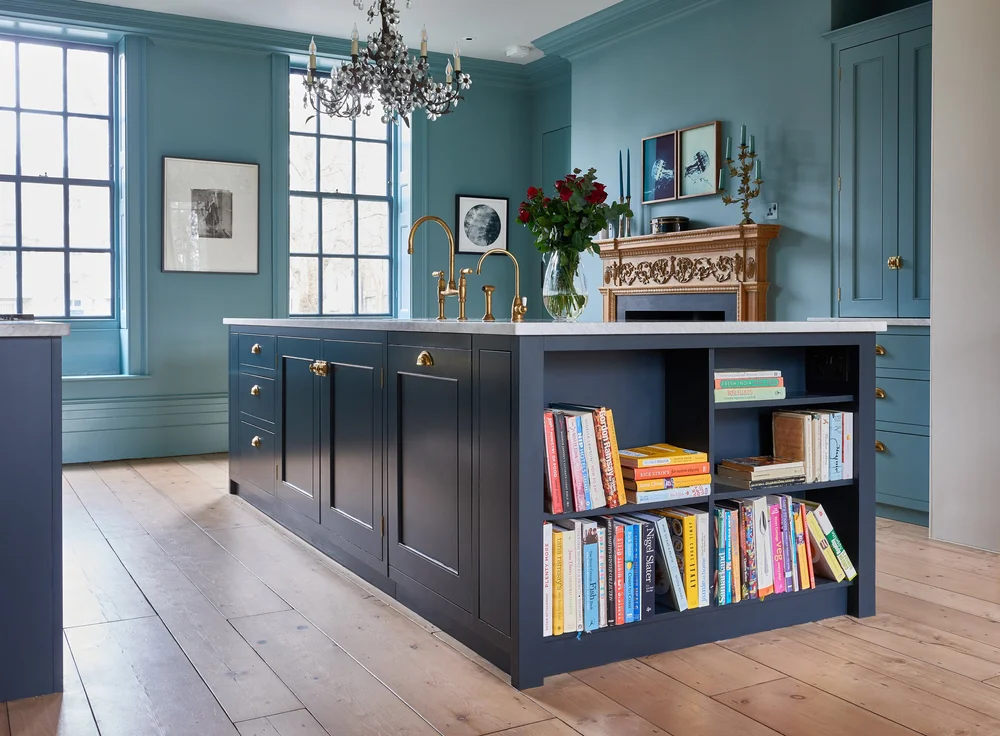
| Navy | White, pale warm grey, brass detail, oak | Black or very dark stone | Navy already carries the weight |
| Off white or bone | Almost anything | Nothing in particular | The most forgiving cabinet colour |
The reliable rule is to keep the undertone consistent. Warm cabinets need a warm worktop and cool cabinets need a cool one. Mixing a warm cream door with a cool grey stone is the single most common pairing error we are asked to fix. Colour selection for the cabinets themselves is covered in Hand Painted Kitchen Colours.
How much does it cost to replace a worktop?
Replacing worktops alone is one of the most cost effective updates in a kitchen, provided the cabinets are sound and the layout is not changing.
| Item | Typical cost | Note |
|---|---|---|
| Removing the old worktop | £150 to £400 | More if it is bonded stone rather than laminate |
| Templating | £150 to £300 | Often included in a stone price |
| New laminate, seven metre run | £1,000 to £2,300 | Can be cut and fitted the same day |
| New quartz, seven metre run | £2,500 to £4,800 | Ten to fifteen working days between template and fit |
| Disconnecting and refitting the sink | £150 to £350 | Plumber, half a day |
| New upstands or splashback | £200 to £900 | Matching stone costs more than tile |
| Making good the wall behind | £100 to £400 | Almost always needed |
Budget for the whole list rather than the slab price. A quartz replacement on a seven metre run realistically lands between three thousand and six thousand pounds once removal, plumbing and making good are included.
The timing catch is the same as on a new kitchen. Stone cannot be templated until the old worktop is off, so there is a two week gap with no sink. How Long Does a Bespoke Kitchen Take explains why.
How to choose in the right order
- Fix the height first. It affects the cabinets, so it cannot wait.
- Fix the depth next. It affects gangways and reach across an island.
- Decide how you cook. Hot pans on the surface point away from quartz. Heavy chopping points away from marble.
- Set the budget per square metre. Measure your actual run before falling for a material.
- Choose the family, then the slab. Warm or cool, quiet or veined, before any specific product.
- See the full slab, not a sample. Veining varies enormously across a piece of stone.
- Choose thickness last. It is a visual decision once everything else is settled.
Point six is worth insisting on. A 100mm sample tells you the colour and nothing about the pattern. Ask to view the actual slabs your kitchen will be cut from, particularly with marble or heavily veined quartz.
More on specifying a kitchen properly
Worktops, cabinets, colours, lighting, layouts and budgets, written for people commissioning a kitchen rather than buying one. Everything sits in our Bespoke Kitchen Guides library.
Frequently asked questions
How high should a kitchen worktop be?
The UK standard is 890mm to 920mm, with 900mm most common. That suits someone around 1.7m tall. A comfortable height sits roughly 100mm to 150mm below your bent elbow, so taller households benefit from 920mm to 950mm and shorter ones from 860mm to 880mm. Setting the height to the user is one of the clearest advantages of a bespoke kitchen.
How deep are kitchen worktops?
Standard depth is 600mm, sitting about 20mm to 40mm proud of a 560mm to 580mm base unit. A 650mm worktop is more comfortable because it leaves room for a kettle or knife block at the back. Behind a hob, 650mm to 700mm gives better landing space. In a narrow galley, 500mm to 560mm recovers gangway width.
What worktop goes with a cream kitchen?
Warm beige or cream toned quartz, honed limestone tones, oak and warm greys all work. Avoid bright white and cool blue greys, because a cool worktop makes cream cabinets read as yellow. The reliable rule is to keep the undertone consistent, so warm cabinets take a warm worktop.
Which kitchen worktop is best?
Quartz suits most London kitchens because it is non porous, needs no sealing and resists scratching, though the resin binder scorches so hot pans must go on a trivet. Granite handles heat perfectly and needs occasional sealing. Porcelain and sintered stone are the most durable overall at the highest price. Timber marks easily yet is the only surface that sands back to new.
How much does it cost to replace kitchen worktops?
Laminate on a seven metre run costs £1,000 to £2,300 supplied and fitted, quartz £2,500 to £4,800. Add £150 to £400 to remove the old worktop, £150 to £350 for the plumber to disconnect and refit the sink, then £100 to £400 for making good. A realistic total for quartz is £3,000 to £6,000.
Should a worktop be 20mm or 30mm thick?
30mm is the most common choice in bespoke kitchens. It costs roughly twenty per cent more than 20mm and reads as substantially more solid without needing a built up edge. Choose 20mm for minimal and handleless schemes. Choose a built up 40mm to 60mm edge for traditional rooms or islands.
Where to go next
Height and depth decide how a kitchen feels to use. Material decides how it ages. Colour decides how it looks in a photograph, which is the least important of the three even though it gets chosen first. Our Bespoke Kitchens North London page shows how we specify worktops as part of the cabinetry rather than as an afterthought.
More from this guide series
- How to Plan a Bespoke Kitchen for the dimensions across the whole room
- Kitchen Island Sizes and Cost for overhangs and island depths
- Hand Painted Kitchen Colours for pairing cabinet colours
- What Kitchen Cabinets Are Made From for what sits under the worktop
- How Much Does a Bespoke Kitchen Cost for the whole budget picture
- Bespoke Kitchen Guides for every guide in the series
Tell us how tall you are and how you cook. Those two answers narrow the worktop choice faster than any showroom visit.